What Dallas Homeowners Should Check After a Storm
When a storm rolls through Dallas, the damage it leaves behind can feel overwhelming. High winds, heavy rain, and flying debris often turn a familiar yard into a tangle of broken branches and toppled trees. Knowing what to look for in the immediate aftermath helps you act quickly, protect your property, and avoid further hazards. This guide walks through the key points to inspect so you can make clear decisions about what needs attention first.
Start With Safety: Look Up and Around
Before you step outside after the storm passes, take a moment to assess from a safe spot. If you hear cracking or groaning sounds near any tree, keep your distance. Trees that have taken a beating may look whole from one angle but be ready to drop a heavy limb. The first thing to check is your immediate surroundings for visible power line hazards. If a tree limb has come down across a power line, treat every wire as if it is live. Do not approach it, do not try to move it, and do not let anyone else near it. Call the utility company and let them handle the situation. Your safety and your family's safety come before any cleanup work.
Once you have confirmed that no power lines are involved, walk around your property slowly and look up. Scan for hanging limbs that are still partly attached. A branch that has split but not fallen can swing down without warning, especially if another gust of wind hits it or if the weight of rain shifts it. These hanging limbs are one of the most common sources of injury after a storm. Mark them mentally or with a piece of tape on the ground below so you remember to address them, but do not stand directly under them to do the marking. If you have children or pets, keep them indoors while you do this first inspection.
Check the Roof and Gutters for Impact
After you have a general sense of the trees around the house, turn your attention to the roof. Roof impact from a fallen tree or heavy branch is one of the most expensive types of storm damage. Even if no tree has come all the way down, a heavy limb may have scraped across the shingles or punched a hole. Look for missing shingles, dented flashing, or visible daylight through the roof deck. If you see any of these signs, there is a good chance water is already getting into the attic or the ceiling below. Do not climb onto the roof yourself if it is wet or steep; that is a job for a qualified professional. Instead, note the spot from the ground and check inside the house for water stains on the ceiling. A wet spot that grows over the next few hours tells you the leak is active.
The gutters are another spot that gets overlooked in the rush to deal with bigger problems. If a tree limb has fallen across the roofline, it may have bent or pulled the gutters away from the fascia. Damaged gutters can lead to water pooling against the foundation or running down the siding, which causes rot and mold over time. You can check this from the ground by looking for sagging sections or gaps between the gutter and the roofline. If the gutter is clogged with leaves and storm debris, water may back up and overflow, adding to the risk of foundation issues. Clearing the gutters of loose debris is a straightforward job once you have confirmed there are no hanging limbs above them.
Assess the Trees Themselves
Once you have handled the immediate safety checks and the roof, it is time to look closely at the trees that are still standing. A tree that looks fine from a distance may have hidden damage that makes it dangerous. Start by checking the trunk. A split trunk is one of the most serious signs of structural failure. If the trunk has a vertical crack that runs deep into the wood, or if two main stems have separated at a crotch, the tree is unlikely to survive and may fail completely in the next storm. Even if the tree is not leaning now, a split trunk weakens the entire structure. This kind of damage usually means the tree needs to be removed before it becomes a falling hazard.
Next, look at the branches that are still on the tree. Some limbs may have snapped partway through, leaving a jagged break that is still attached at one side. These are the hanging limbs mentioned earlier, and they are dangerous because they can fall with little warning. A hanging limb that is high up or over a walkway, driveway, or play area needs to be brought down carefully. Do not try to pull it down with a rope or throw something at it; that can make the situation worse or cause the limb to fall on you. This is a job for someone with the right equipment and training.
Also check for a phenomenon called included bark. This happens when two branches grow close together and the bark gets trapped between them instead of forming a strong union. Included bark creates a weak joint that is prone to splitting during high winds. If you see a V-shaped crotch where the bark is pinched between the two stems, that joint is more likely to fail. You can note those spots for a professional arborist to evaluate later, especially if the tree is close to the house.
Clear the Driveway and Walkways
A blocked driveway can stop you from getting the car out and make it hard for emergency vehicles to reach your home. If a tree or large branch has fallen across the driveway, it is one of the first things you will want to clear. But before you start cutting, take a moment to check whether the fallen tree is under tension. A tree that has bent over or is leaning against another tree may be under spring tension, meaning it can snap back violently when you cut it. Even a tree lying on the ground can be under tension if it is pinned at one end or caught in a tangle with other branches. If you see any signs of tension, such as the trunk being bowed or the branches pulled tight, leave the cutting to a professional. Chain saws and tension do not mix well, and the result can be serious injury.
If the driveway is blocked by a small branch that is clearly not under tension, you can move it by hand or with a handsaw. But for anything larger than a wrist-thick branch, it is safer to call for help. The same goes for walkways and paths around the house. A clear path from the front door to the street is important for your own movement and for anyone who needs to reach you. If you have elderly family members or anyone with mobility issues living with you, clearing a safe route is even more urgent.
Look for Hidden Damage to the Foundation and Siding
Not all storm tree damage is visible at first glance. A tree that has fallen against the house may have pushed against the siding, causing hidden cracks or gaps that let in moisture and pests. Walk around the perimeter of the house and look at the siding closely. If you see any splits, dents, or areas where the siding has been pulled away from the wall, make a note of them. Even if the tree did not hit the house directly, a heavy limb that landed nearby can sometimes cause the ground to shift, which can affect the foundation over time. Look for cracks in the foundation walls or in the concrete slab. Small hairline cracks are common and may not be urgent, but larger cracks that are growing or that let water seep in should be inspected.
The soil around the base of a tree can also tell you something. If the ground is heaving or if there is a mound of soil near the root flare of a tree that is still standing, the tree may have partially uprooted. A tree that has tipped in the soil but is not yet fallen is called a leaner, and it is unstable. Even a gentle breeze can bring it down. If you see lifted roots or soil that is cracked around the base of a tree, keep everyone away from it and arrange for a professional assessment as soon as possible.
Document Everything for Insurance
While you are walking through the checklist, take photos and notes. Start with wide shots that show the overall scene, then take close-ups of specific damage like the split trunk, the roof impact, the blocked driveway, and any hanging limbs. If you can, take photos from multiple angles. Good documentation makes it easier to file an insurance claim and helps the adjuster understand the scope of the damage. Write down the date and time the storm hit, and note any conversations you have with neighbors about shared damage, such as a tree that fell from their yard into yours. Keep all receipts for any work you pay for, including cleanup and temporary repairs like tarping a damaged roof.
If you need to make a temporary repair to protect your home from further damage, such as covering a broken window or patching a hole in the roof with a tarp, do that as soon as it is safe. Most insurance policies cover reasonable temporary repairs, and they can prevent the damage from getting worse while you wait for permanent fixes. Just be sure to keep the receipts and take photos of the temporary repair in place.
When to Call in the Professionals
Some tasks are straightforward and can be handled by a homeowner with basic tools and good judgment. Picking up small branches, raking debris, and clearing leaves from gutters are all within reach for most people. But when you are dealing with a split trunk, a hanging limb high off the ground, a tree that is leaning over the house, or a fallen tree that is tangled with power lines or under tension, it is time to bring in someone who does this work every day. Tree care requires specialized equipment and knowledge of how trees behave under stress. Trying to save a few dollars by doing it yourself can lead to costly property damage or serious injury.
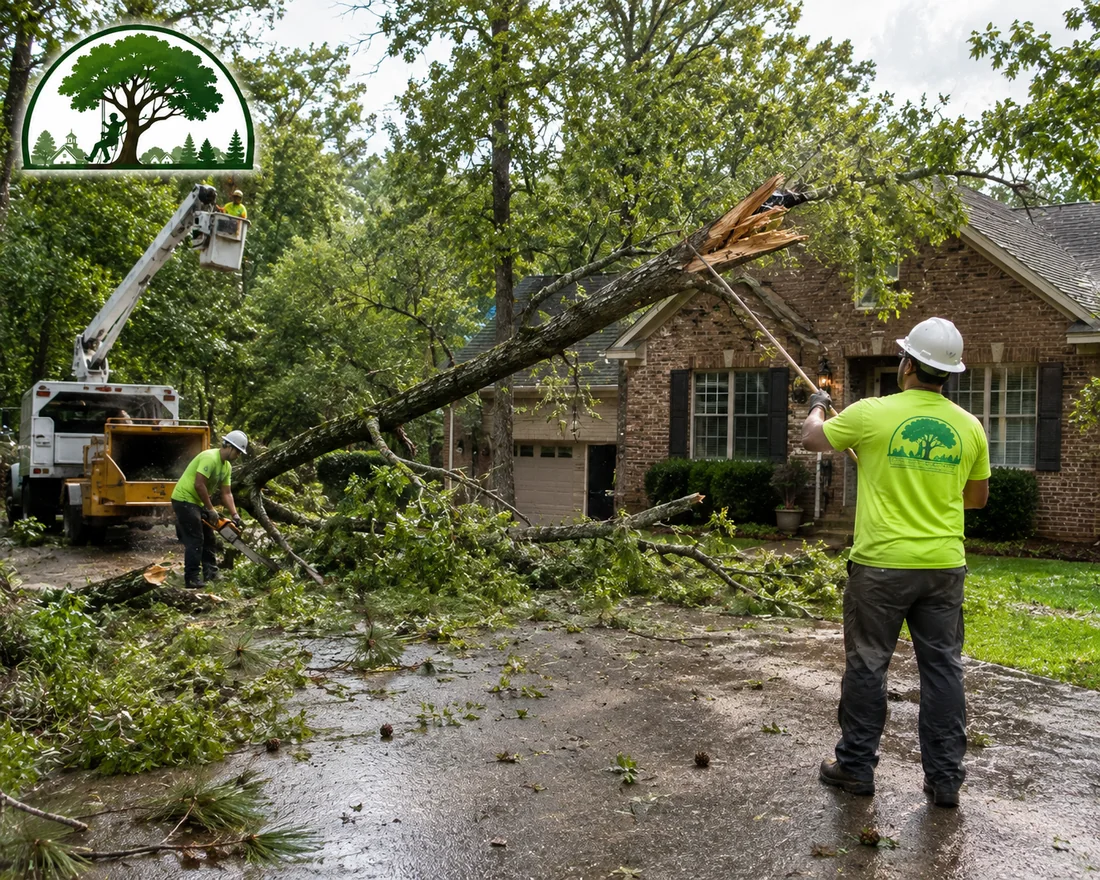
In the hours and days after a storm hits, Dallas homeowners often need fast help after storm damage to get their property back to normal. Knowing what to check first helps you prioritize the most dangerous issues and make smart decisions about what can wait and what needs immediate attention. Whether it is a small branch on the driveway or a large tree leaning toward the house, having a clear plan in place before the next storm rolls through makes the whole process less stressful.
Keep this checklist handy, share it with your family, and review it at the start of storm season. A little preparation goes a long way when the weather turns. And if you ever find yourself facing damage that feels too big to handle alone, remember that professional help is just a phone call away. The key is to stay calm, stay safe, and take it one step at a time. For many homeowners, getting fast help after storm damage means the difference between a quick recovery and weeks of frustration.